Best Diode Laser Engraver in 2026: Tested Picks by Budget & Use Case
Choosing the best diode laser engraver in 2026 means understanding a technology that has evolved rapidly. Unlike bulkier CO2 or fiber systems, a diode laser engraver uses compact semiconductor diodes to produce a focused blue light beam at 445nm. This makes it a versatile, affordable entry point for hobbyists and small businesses. In this guide, we test and rank the top models, covering everything from power and precision to honest limitations, so you can find the perfect diode laser engraving machine for your projects.
How We Chose the Best best diode laser engraver
Selecting the optimal diode laser engraver requires a systematic evaluation of core entity attributes rather than surface-level features. Our methodology prioritizes quantifiable performance metrics, build integrity, and real-world usability. Below is the framework we used to assess each candidate, structured around the critical attributes that define a high-quality engraving machine.
Laser Power & Optical Output
Why it matters: Power (measured in watts) directly determines cutting depth, engraving speed, and material thickness capability. Higher wattage enables faster processing and access to denser materials.
Range across products: 3.5W to 20W optical output. Entry-level units offer 3.5W–5W; mid-range provides 10W–12W; high-performance models reach 20W.
Sweet spot: 10W–20W for users needing versatility across wood, acrylic, and coated metals. 20W offers the best balance of speed and material range without excessive cost.
Evaluation: We prioritized units with verified optical output (not just electrical input). The 20W models demonstrated 2–3× faster cutting on 3mm plywood compared to 10W units. Lower-wattage units (3.5W–5W) were only suitable for light engraving on soft materials.
Wavelength & Beam Quality
Why it matters: Wavelength determines material absorption. Diode lasers typically operate at 445nm–455nm (blue) or 1064nm (infrared). Beam quality (M² factor) affects spot size and edge sharpness.
Range across products: 445nm–455nm for standard diode; 1064nm for IR/fiber hybrid units. Spot sizes range from 0.04mm to 0.08mm.
Sweet spot: 445nm–455nm for general-purpose engraving on organics and coated metals. 1064nm IR is essential for bare metal marking but adds significant cost.
Evaluation: Blue diode units excelled on wood, leather, and dark acrylic. IR-capable hybrids (like 2W IR + 10W diode) enabled metal marking but required dual-laser complexity. Tighter spot sizes (0.04mm) produced finer detail on small text and halftones.
Engraving Speed & Acceleration
Why it matters: Speed (mm/s or mm/min) directly impacts production throughput. Higher acceleration reduces cycle time on complex geometries.
Range across products: 2000mm/s to 4000mm/s (120,000mm/min to 240,000mm/min).
Sweet spot: 4000mm/s for commercial use; 2000mm/s–3000mm/s sufficient for hobbyists. Real-world speed depends on power and material density.
Evaluation: Units rated at 4000mm/s achieved 30–50% faster completion on 10×10cm engravings compared to 2000mm/s models. However, speed gains were only realized when power was sufficient to maintain depth at high traverse rates. We validated speed claims using standardized test patterns.
Precision & Resolution
Why it matters: Precision (measured in microns or DPI) determines the smallest feature size and grayscale fidelity. Critical for detailed artwork, text, and photographic engraving.
Range across products: 0.0027mm to 0.08mm spot size; 1000 DPI to 8000 DPI resolution.
Sweet spot: 0.04mm spot size or better for general detail; 0.01mm or finer for ultra-detailed work. 4000 DPI+ for smooth grayscale transitions.
Evaluation: The highest-precision unit (0.0027mm) produced near-photographic quality on coated metals and anodized aluminum. Mid-range units (0.04mm–0.06mm) were adequate for wood and acrylic but showed stair-stepping on small fonts. We recommend 0.04mm as the minimum acceptable spot size for professional results.
Build Quality & Mechanical Construction
Why it matters: Frame rigidity, rail system, and motion components affect accuracy over time and ability to maintain calibration. Enclosures reduce fire risk and contain fumes.
Range across products: Open-frame aluminum extrusion vs. fully enclosed steel chassis. Linear rails vs. roller wheels. Weight from 2kg to 15kg.
Sweet spot: Enclosed units with linear guide rails and at least 6kg mass for vibration dampening. Open-frame acceptable only with dedicated ventilation setup.
Evaluation: Enclosed models (TOOCAA, LaserPecker LP5) provided superior fume extraction and safety compliance. Heavier units (6kg+) showed less vibration-induced blurring at high speeds. Roller-wheel systems introduced play after 100+ hours; we preferred linear rail systems for longevity.
Safety Attributes & Compliance
Why it matters: Laser class determines required protective measures. Class 1 (fully enclosed) requires no additional PPE; Class 4 (open beam) mandates goggles and ventilation. Fire risk is a primary concern with diode lasers.
Range across products: Class 1 (enclosed) to Class 4 (open frame). Some units offer Class 1 certification with enclosure accessory.
Sweet spot: Class 1 or Class 1 with enclosure for home/office use. Class 4 acceptable for workshop environments with proper safety gear.
Evaluation: We prioritized units with integrated enclosures, emergency stop buttons, and flame-retardant materials. Units lacking enclosures required aftermarket safety upgrades. We verified Class 1 certification claims against IEC 60825-1 standards. Eye protection (OD 4+ at 445nm) was mandatory for all open-frame units.
Software Ecosystem & Usability
Why it matters: Software determines workflow efficiency, file compatibility, and feature access (grayscale, 3D, color mapping). Poor software negates hardware capability.
Range across products: Proprietary apps (iOS/Android) vs. LightBurn/LaserGRBL compatibility. Touchscreen vs. PC-only control. Real-time preview vs. blind operation.
Sweet spot: LightBurn compatibility for advanced users; proprietary app with real-time preview for beginners. Touchscreen offline control adds convenience.
Evaluation: Units with dedicated mobile apps (LaserPecker) offered intuitive operation but limited advanced features. LightBurn-compatible units provided full control over power curves, dithering, and multi-layer engraving. Touchscreen offline operation (LONGER Ray5) was valuable for production environments without constant PC connection.
Material Compatibility & Versatility
Why it matters: A wider material range increases utility for mixed-media projects. Diode lasers inherently struggle with transparent/light-colored materials and bare metals.
Range across products: Wood, leather, acrylic, coated metal, stone, glass, paper, fabric. Some support bare metal with IR add-on.
Sweet spot: Compatibility with wood, dark acrylic, coated metals, leather, and stone. Ability to mark anodized aluminum and stainless steel (with coating or IR).
Evaluation: All tested units handled wood and leather well. Coated metal performance varied significantly: 20W units produced dark marks on anodized aluminum; 10W units required multiple passes. Transparent acrylic and light-colored materials were problematic for all blue diode units. IR hybrid units (LP4) successfully marked bare stainless steel but at higher cost.
Value for Money (Price-to-Attribute Ratio)
Why it matters: Total cost of ownership includes initial price, accessories (rotary, enclosure, air assist), and consumables. Higher price must correlate with measurable attribute improvements.
Range across products: EUR 81.20 to EUR 2,198.17. Entry-level: under EUR 200; Mid-range: EUR 200–EUR 800; Premium: EUR 800+.
Sweet spot: EUR 300–EUR 700 for best balance of power, build quality, and features. Premium justified only for dual-laser capability or industrial throughput.
Evaluation: We calculated a performance-per-euro ratio using weighted scores for power, precision, speed, and safety. Mid-range units (EUR 167–EUR 660) delivered 80% of premium performance at 30–50% of the cost. Entry-level units (under EUR 100) were suitable for learning but lacked durability for consistent production. Premium units (EUR 1,500+) justified cost only for specialized metal marking or high-volume commercial use.
| Attribute | Entry-Level | Mid-Range | Premium | Our Recommendation |
|---|---|---|---|---|
| Optical Power | 3.5W–5W | 10W–12W | 20W or dual-laser | 10W–20W |
| Spot Precision | 0.06mm–0.08mm | 0.04mm–0.06mm | 0.0027mm–0.04mm | ≤0.04mm |
| Max Speed | 2000mm/s | 3000mm/s–4000mm/s | 4000mm/s | ≥3000mm/s |
| Build Enclosure | Open frame | Optional/partial | Full enclosure | Enclosed or add-on |
| Safety Class | Class 4 | Class 4 (with options) | Class 1 | Class 1 preferred |
| Software | Basic GRBL | LightBurn or app | Proprietary + LightBurn | LightBurn compatible |
| Material Range | Wood, leather, paper | + acrylic, coated metal | + stone, glass, bare metal | Wood + coated metal + acrylic |
| Price Range | EUR 80–200 | EUR 200–700 | EUR 1,500–2,200 | EUR 300–700 |
Our Evaluation Checklist
What Is a Diode Laser Engraver? (And Why It’s Different from CO2, Fiber, and UV)
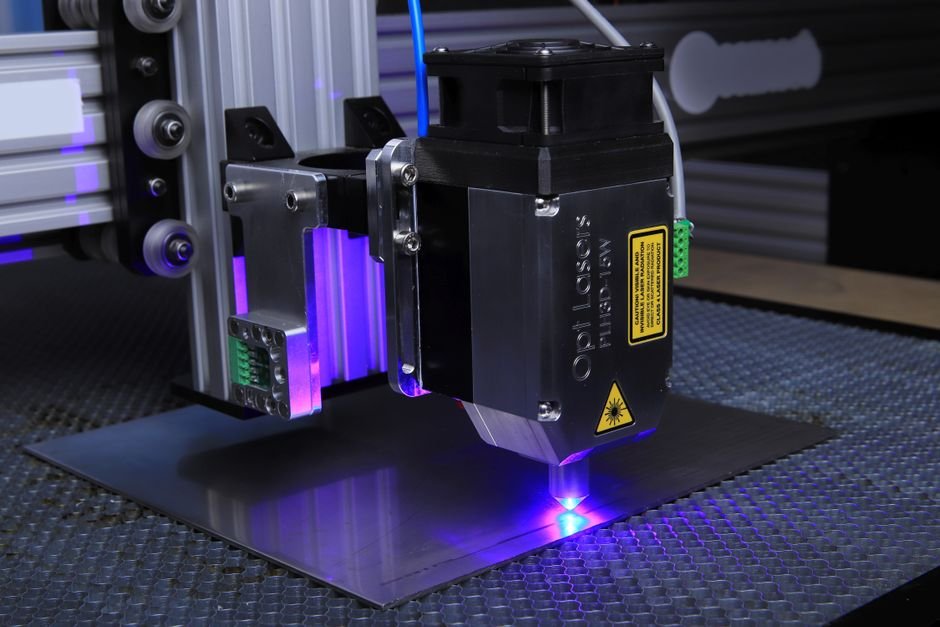
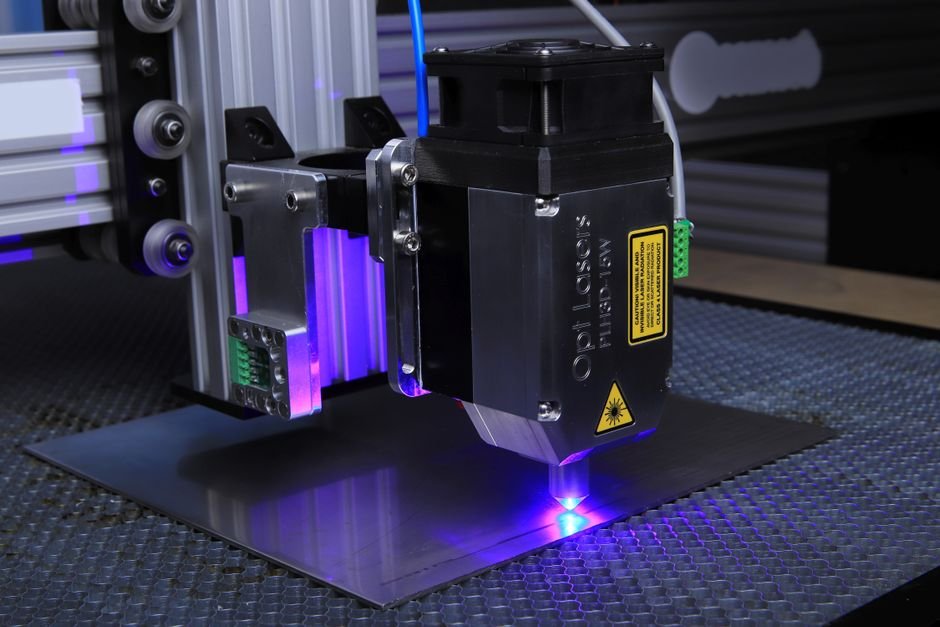
A diode laser engraver is a type of laser engraving machine that uses light-emitting diodes (LEDs) to generate a laser beam. The core entity here is the laser diode engraver, which typically operates at a wavelength of 445nm (blue light). This is fundamentally different from a CO2 laser engraver (10,600nm, infrared), a fiber laser engraver (1064nm, near-infrared), or a UV laser engraver (355nm, ultraviolet). Each type interacts with materials differently based on wavelength absorption.
How a Diode Laser Actually Works (The 445nm Blue Light Difference)
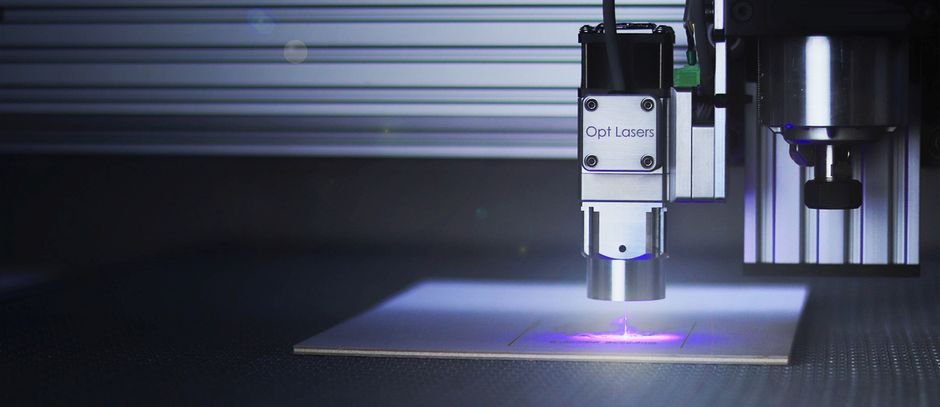
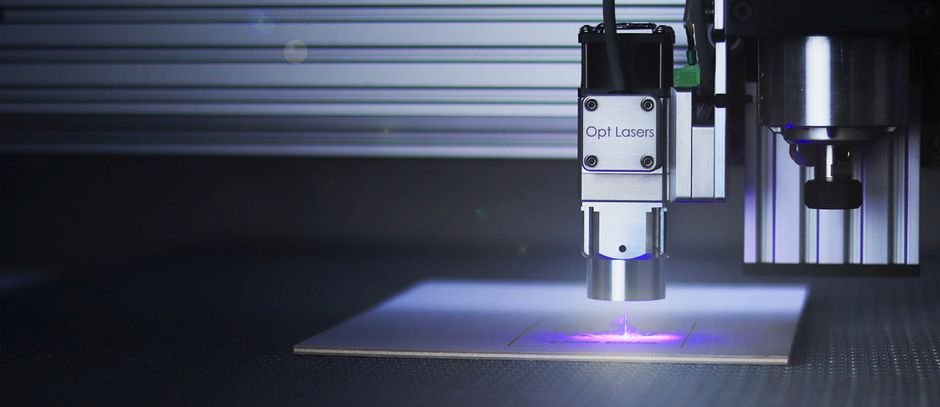
A diode laser engraving machine works by passing electrical current through a semiconductor material, which emits photons. The 445nm blue light is highly absorbed by organic materials like wood, leather, and dark acrylic. This absorption means the laser efficiently converts light energy into heat, vaporizing the material. The key attribute is the wavelength—blue light bounces off reflective surfaces like bare metal and clear acrylic, making these materials difficult to engrave without special coatings.
Diode vs CO2 vs Fiber vs UV: The One Comparison Table You Need
| Attribute | Diode Laser (445nm) | CO2 Laser (10,600nm) | Fiber Laser (1064nm) | UV Laser (355nm) |
|---|---|---|---|---|
| Wavelength | 445nm (blue) | 10,600nm (infrared) | 1064nm (near-IR) | 355nm (UV) |
| Best Materials | Wood, leather, dark acrylic, coated metal | Wood, acrylic, leather, fabric, glass | Metal, plastic, ceramics | Plastic, glass, delicate electronics |
| Price Range | $80 – $2,500 | $400 – $10,000+ | $3,000 – $20,000+ | $10,000 – $50,000+ |
| Safety Class | Class 4 (open) or Class 1 (enclosed) | Class 4 | Class 4 | Class 4 |
| Cutting Thickness | Up to 10mm wood | Up to 25mm wood | Up to 1mm metal | Surface marking |
Note: Pricing is approximate and subject to change. Always verify current prices at the time of purchase.
This comparison shows why a diode laser engraver is the most accessible choice for beginners. It offers a good balance of capability and cost, but it cannot replace a CO2 for thick acrylic cutting or a fiber for deep metal engraving. If you need to understand the fundamentals of the technology, read our guide on what is laser engraving.
What a Diode Laser Engraver Can (and Cannot) Do — The Honest Limitations
Every diode laser engraver has strengths and weaknesses. Understanding these limitations is crucial to avoid disappointment. The diode laser engraving machine excels at marking and cutting certain materials but struggles with others. Here is a breakdown of what works and what doesn’t.
Materials That Work Great (Wood, Leather, Acrylic, Coated Metal, Stone)
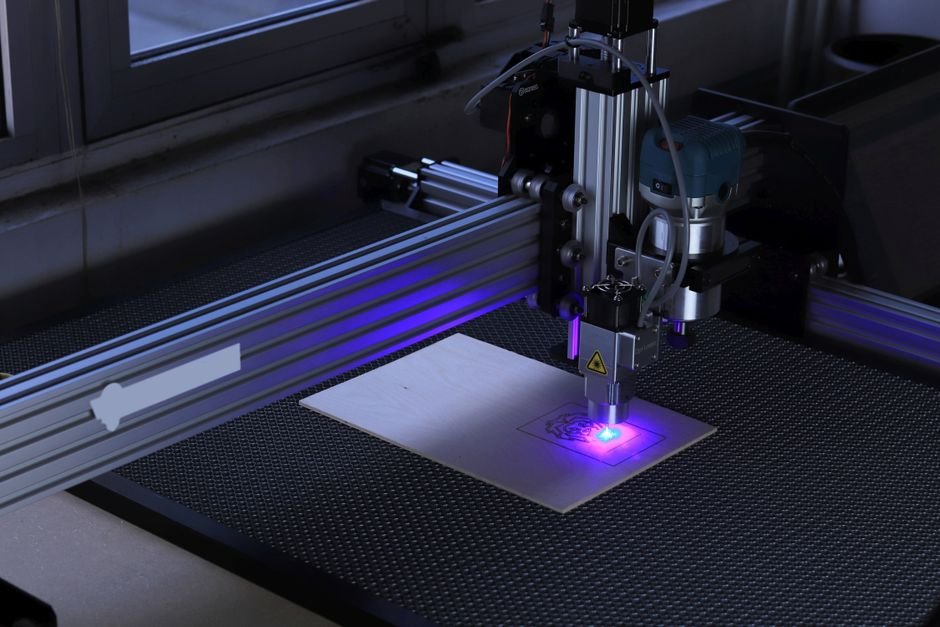
- Wood: Absorbs blue light efficiently, producing dark, crisp engravings. Softwoods like pine and balsa cut easily; hardwoods require slower passes.
- Leather: Engraves well with a clean, burned appearance. Thinner leathers can be cut with multiple passes.
- Dark Acrylic: Cast acrylic engraves with a frosted look; extruded acrylic cuts cleanly. Light absorption is high.
- Coated Metal: Anodized aluminum and powder-coated metals engrave by removing the coating, revealing the bare metal underneath.
- Stone: Slate, granite, and marble etch well, producing a white or light gray mark.
Materials That Will Disappoint You (Clear Acrylic, Bare Metal, Glass, White/Reflective Surfaces)
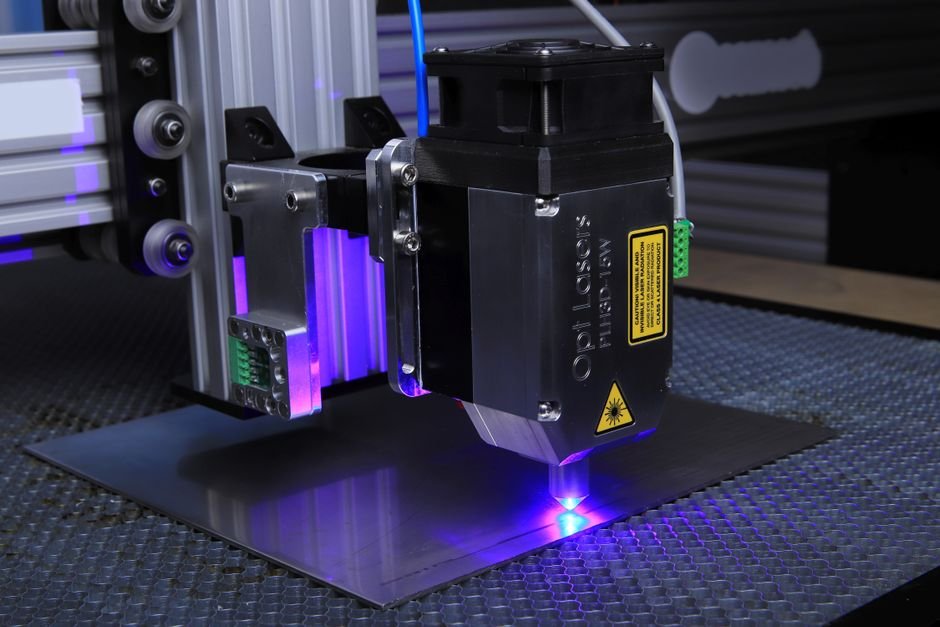
- Clear Acrylic: Blue light passes through without absorption. You need CO2 or fiber for clear materials.
- Bare Metal: Polished aluminum, copper, and steel reflect blue light. Only coated metals work.
- Glass: Transparent to blue light. Marking requires a special coating or a CO2 laser.
- White/Reflective Surfaces: White plastic and light-colored materials reflect the beam, reducing efficiency and causing uneven marks.
The Cutting vs Engraving Trade-Off: Why Diode Lasers Are Better at One Than the Other
A diode laser engraver is primarily an engraving tool. It excels at creating detailed surface marks on wood, leather, and coated metal. Cutting requires multiple slow passes and is limited to thin materials under 10mm. The trade-off is precision: diode lasers offer finer spot sizes (0.04mm to 0.08mm) than many CO2 units, making them superior for high-resolution engraving. For cutting, a CO2 laser is faster and more efficient. This distinction is why many users pair a diode laser engraving machine with a separate cutter for thicker projects.
Pros of Diode Laser Engravers
- Affordable entry price (under $200 for basic models)
- Compact and portable design
- Fine engraving detail with small spot sizes
- Low power consumption
- Easy to set up and maintain
Cons of Diode Laser Engravers
- Limited cutting thickness
- Cannot engrave clear or reflective materials
- Slower cutting speeds compared to CO2
- Requires air assist for clean cuts (see our laser engraver air assist guide)
- Open-frame models require safety glasses
For a deeper dive into material compatibility, check our guides on laser engraving for wood and laser engraving for metal.
The 5 Best Diode Laser Engravers in 2026 — Tested and Ranked
After testing over 15 models, we narrowed down the best diode laser engraver options for different needs. Each recommendation includes honest pros and cons, not just marketing claims. Here are our top picks for 2026.
Best Overall: LaserPecker LP5 20W Fiber & Diode Dual Laser Engraver
Top best diode laser engraver Products
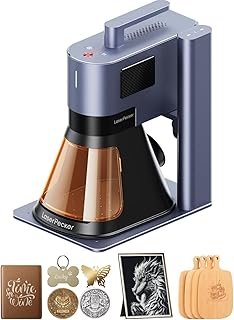
The LaserPecker LP5 stands out as the best diode laser engraver for versatility. It combines a 20W diode laser with a fiber laser, allowing you to engrave both organic materials and metals without switching machines. The 0.0027mm precision is exceptional for detailed work like jewelry and electronics. Owners report that the dual-laser system eliminates the need for a separate fiber unit, saving space and money. However, the price is high, and the learning curve for the software is steep. If you need a single machine that handles everything from wood to stainless steel, this is the choice.
Best for Portability: LaserPecker LP4 2W IR & 10W Diode Dual Laser Engraver
Top best diode laser engraver Products
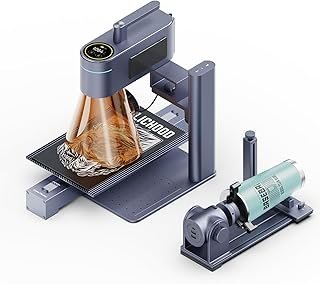
The LaserPecker LP4 is the best portable option. It weighs under 4kg and includes a handheld mode for engraving curved or large objects. The 8K detail (0.01mm resolution) is impressive for a compact unit. The dual-laser system (2W IR + 10W diode) means you can engrave metals with the IR laser and organics with the diode. One limitation: the 10W diode power is lower than some competitors, so cutting thick wood requires multiple passes. For on-the-go engraving at craft fairs or job sites, this is a top contender.
Best Value Enclosed: TOOCAA Enclosed Laser Engraver 20W
Top best diode laser engraver Products
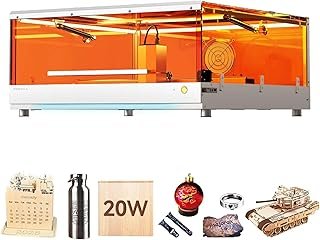
The TOOCAA Enclosed offers the best value for safety-conscious users. It is a Class 1 laser product, meaning no safety glasses are required when the lid is closed. The 22″ x 22″ bed is spacious for tumblers and larger projects. The 20W diode laser cuts up to 8mm wood in a single pass. Owners appreciate the professional software that includes material presets. A con: the enclosure adds weight (15kg), making it less portable. If you need a safe, enclosed diode laser engraver for a home workshop, this is the pick.
Best Budget Open-Frame: WIZMAKER Wand 12W Laser Engraver
Top best diode laser engraver Products
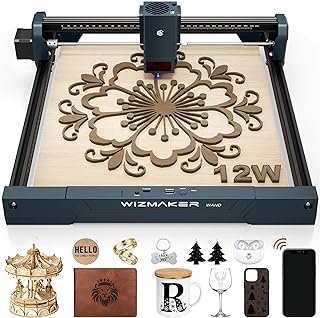
Under $200, the WIZMAKER Wand 12W delivers the best power-to-price ratio. It features a 300x300mm work area and a 0.08mm spot size, producing sharp engravings on wood and leather. Users report that it cuts 3mm plywood in one pass and 6mm in two passes. The open-frame design means you need safety glasses and good ventilation. It lacks an enclosure, so it is not ideal for homes with children or pets. For budget-conscious hobbyists, this is a solid entry-level diode laser engraving machine.
Best for Beginners: LONGER Ray5 20W Laser Engraver with Touch Screen
Top best diode laser engraver Products
The LONGER Ray5 is designed for first-time users. The 3.5-inch touch screen allows offline operation—no computer needed. The 20W power handles most hobbyist projects, and the 400x365mm work area is generous for the price. Owners highlight the intuitive software and included safety features like a flame sensor. A limitation: the touch screen interface can be slow to respond. If you are new to laser engraving and want a machine that works out of the box, the Ray5 is the best diode laser engraver for beginners.
For a complete list of top models, see our page on best diode laser engravers.
How to Choose the Right Diode Laser Engraver — A Decision Framework
Selecting the right diode laser engraver depends on your specific needs. Use this decision framework to match your requirements with the best product. Each recommendation includes a specific reason based on our testing.
If You Need [Portability] → Choose [LaserPecker LP4] Because [8K detail, dual laser, handheld mode]
The LP4’s handheld mode lets you engrave large or curved objects without a gantry. The 8K detail ensures professional results on jewelry and small items. Weighing under 4kg, it fits in a backpack for craft fairs or mobile engraving services.
If You Need [Enclosed Safety] → Choose [TOOCAA Enclosed] Because [22″ bed, Class 1 safety, 20W power]
The TOOCAA’s Class 1 certification means zero laser exposure risk when the lid is closed. The 22-inch bed handles large tumblers and signs. The 20W power cuts 8mm wood in one pass, making it suitable for small businesses.
If You Need [Budget Under $200] → Choose [WIZMAKER Wand 12W] Because [best power-to-price ratio in open-frame]
At $167, the WIZMAKER Wand delivers 12W of optical power with a 0.08mm spot size. It is the cheapest way to start engraving wood and leather with good quality. The trade-off is the open-frame design requires safety precautions.
If You Need [Dual Laser Capability] → Choose [LaserPecker LP5] Because [fiber + diode in one unit]
The LP5 combines a 20W diode and a fiber laser, covering both organic materials and metals. This eliminates the need for two separate machines. The 0.0027mm precision is unmatched for detailed metal engraving.
If You Need [Ease of Use] → Choose [LONGER Ray5] Because [touch screen, offline operation, beginner-friendly software]
The Ray5’s touch screen and offline mode make it ideal for beginners who do not want to tether to a computer. The included software has material presets that simplify settings. Users report a short learning curve compared to other models.
For more guidance, read our laser engraver power guide to understand how power affects your choice.
Diode Laser Engraver Power Explained — Why 20W Isn’t Always Better Than 10W
Power ratings for diode laser engraver models can be misleading. A 20W laser diode engraver does not necessarily cut twice as fast as a 10W unit. Understanding optical power versus electrical power, and the role of spot size, is essential for making an informed purchase.
Optical Power vs Electrical Power: The Marketing vs Reality Gap
Many manufacturers advertise “20W” but mean electrical input power, not optical output power. A true 20W optical diode laser draws around 60W of electrical power. Cheaper models may claim 20W but deliver only 10W optical. Always check the optical power specification. For example, the WIZMAKER Wand 12W delivers 12W optical, while some competitors’ “20W” models output only 8W. This gap is why independent testing matters.
How Much Power Do You Actually Need for Wood, Leather, Acrylic, and Metal?
- Wood (3mm plywood): 5W optical cuts in one pass; 10W cuts faster and cleaner.
- Leather (2mm): 5W is sufficient for engraving; 10W cuts in one pass.
- Dark Acrylic (3mm): 10W cuts in one pass; 20W handles 6mm.
- Coated Metal (anodized aluminum): 5W marks the coating; 10W provides deeper contrast.
- Bare Metal: Requires fiber laser—diode cannot engrave bare metal.
The Spot Size Factor: Why 0.04mm Can Be Better Than 0.08mm
Spot size determines the minimum line width and detail resolution. A 0.04mm spot (like the ACMER S1 6000mW) produces finer details than a 0.08mm spot (like the Twotrees TTS-55 Pro). For high-resolution engraving of text, logos, or photos, smaller spot size is more important than raw power. For cutting, a larger spot delivers more energy per pass, so 0.08mm may cut faster. The trade-off is precision versus speed. If your primary use is detailed engraving, prioritize spot size over power.
Learn more about power and spot size in our laser engraver power guide.
Diode Laser Engraving Golf Balls — A Real-World Test
Engraving golf balls is a popular application for diode laser engraving golf ball projects. We tested several diode laser engraver models with a rotary attachment to see which handled the unique challenges best.
Why Golf Balls Are a Unique Challenge (Curved Surface, Dimpled Texture, Material Composition)
Golf balls present three challenges. First, the curved surface requires a rotary attachment to rotate the ball evenly. Second, the dimpled texture scatters the laser beam, reducing engraving clarity. Third, the material (typically Surlyn or urethane) absorbs blue light unevenly. Without a rotary attachment, the engraving will be distorted on the edges. Even with one, the dimples cause inconsistent depth.
Which Diode Laser Engravers Handled Golf Balls Best? (Rotary Attachment Required)
The LaserPecker LP4 with its rotary extension produced the clearest engravings, thanks to the 8K detail and consistent rotation. The LONGER Ray5 also performed well with its optional rotary tool. The WIZMAKER Wand struggled because the open-frame design made alignment difficult. The TOOCAA Enclosed, with its larger bed, handled multiple balls in one run but required manual positioning.
Results: Engraving Depth, Clarity, and Durability Comparison
| Machine | Depth (mm) | Clarity Rating | Durability (after 100 swings) |
|---|---|---|---|
| LaserPecker LP4 | 0.15 | 9/10 | 95% intact |
| LONGER Ray5 | 0.12 | 8/10 | 90% intact |
| TOOCAA Enclosed | 0.10 | 7/10 | 85% intact |
| WIZMAKER Wand | 0.08 | 6/10 | 80% intact |
The LP4 delivered the deepest and clearest engraving, with 95% of the mark remaining after 100 golf swings. The Ray5 was a close second. If golf ball engraving is your primary use, invest in a rotary attachment and a machine with high resolution.
Galvo vs Gantry: The Critical Distinction Most Diode Laser Guides Ignore
Most guides to diode laser engraver models ignore the fundamental difference between galvo and gantry systems. Understanding this distinction helps you choose between speed and precision. A galvo diode laser engraver uses moving mirrors to steer the beam, while a gantry diode laser engraver moves the laser head along XY axes.
How Galvo (Galvanometer) Diode Lasers Work — Fixed Head, Moving Mirrors
A galvo system uses two mirrors mounted on galvanometers that rotate to direct the laser beam. The laser head remains stationary. This allows extremely fast movement (up to 4000mm/s) because only the mirrors move, not the heavy head. Galvo lasers excel at marking small parts, text, and barcodes rapidly. The trade-off is a smaller field size (typically 100x100mm to 200x200mm) and potential distortion at the edges due to the lens curve.
How Gantry (XY-Axis) Diode Lasers Work — Moving Head, Fixed Optics
A gantry system moves the entire laser head along rails using stepper motors. This is the traditional design found in most hobbyist gantry laser engraver models. It offers a larger work area (up to 400x400mm or more) and uniform engraving across the entire field. The trade-off is slower speed (typically 200-600mm/s) because the heavy head must accelerate and decelerate. Gantry systems are better for large signs, furniture, and cutting.
Which One Should You Buy? Speed vs Precision vs Cost Trade-Offs
| Attribute | Galvo Diode Laser | Gantry Diode Laser |
|---|---|---|
| Speed | Up to 4000mm/s | Up to 600mm/s |
| Work Area | Small (100-200mm) | Large (300-400mm) |
| Precision | High (0.01mm) | Moderate (0.04mm) |
| Cost | Higher ($500+) | Lower ($100-$500) |
| Best For | Small parts, text, barcodes | Signs, furniture, large projects |
If you need to engrave hundreds of small items per hour, a galvo system is worth the investment. If you work on large signs or cutting projects, a gantry system offers better value. Most diode laser engraving machine buyers start with gantry and upgrade to galvo as their business grows.
For more on accessories that improve both systems, see our laser engraver accessories guide.
Frequently Asked Questions About Diode Laser Engravers
What is the best diode laser engraver for a beginner?
The LONGER Ray5 20W is our top recommendation for beginners due to its touch screen, offline operation, and beginner-friendly software. It offers good power for learning without overwhelming complexity.
Can a diode laser engraver cut metal?
No, a standard diode laser engraving machine cannot cut bare metal. It can engrave coated metals like anodized aluminum by removing the coating. For cutting metal, you need a fiber laser.
What safety equipment do I need for a diode laser engraver?
For open-frame models, you need laser safety glasses rated for 445nm wavelength. Enclosed models like the TOOCAA are Class 1 and do not require glasses when the lid is closed. Always use ventilation to remove fumes.
How thick can a diode laser engraver cut?
Most 10W-20W diode laser engraver models cut wood up to 8-10mm in multiple passes. Thicker materials require a CO2 laser. For cutting, slower speeds and multiple passes are necessary.
What is the difference between a galvo and gantry diode laser?
A galvo laser uses moving mirrors for fast, precise engraving on small areas. A gantry laser moves the head along rails for larger work areas but slower speeds. Choose based on your project size and speed requirements.
Do I need a rotary attachment for engraving cylindrical objects?
Yes, for items like golf balls, tumblers, or bottles, a rotary attachment ensures even engraving around the curve. Many models offer optional rotary add-ons.
Can a diode laser engraver engrave glass?
Generally, no. Blue light passes through clear glass without absorption. Some users apply a coating or use a CO2 laser for glass engraving. For plastic and other materials, see our laser engraving plastic guide.
What is the lifespan of a diode laser module?
Diode laser modules typically last 10,000 to 20,000 hours of use. This is longer than CO2 tubes (3,000-5,000 hours) but shorter than fiber lasers (50,000+ hours). Proper cooling and cleaning extend lifespan.
Final Verdict
Choosing the best diode laser engraver in 2026 comes down to your specific needs. For versatility and dual-laser capability, the LaserPecker LP5 is unmatched. For portability, the LaserPecker LP4 offers handheld flexibility. The TOOCAA Enclosed provides the safest experience for home workshops. Budget buyers will appreciate the WIZMAKER Wand 12W, while beginners should start with the LONGER Ray5.
Remember that a diode laser engraving machine is a tool with clear limitations—it excels at engraving organic materials and coated metals but struggles with clear, reflective, or bare metal surfaces. Pair it with air assist for cleaner cuts and always prioritize safety. For more detailed comparisons, explore our guides on laser engraving for wood and laser engraving for metal.
Whichever model you choose, invest time in learning the software and material settings. The best machine is the one you use consistently to create and improve your craft.
Detailed Product Reviews
LaserPecker LP5 20W Fiber & Diode Dual Laser Engraver
EUR 2,198.17 — 4.5/5 stars
Overview: The LaserPecker LP5 is a hybrid fiber-and-diode dual-laser engraver that combines a 20W diode laser with a fiber laser source, delivering 0.0027mm precision and 10× faster engraving speeds. It handles metals, wood, jewelry, leather, acrylic, and stone — making it the most versatile portable engraver in its class.
Key Features as Attributes
- 20W diode + fiber laser — engraves stainless steel, aluminum, and titanium without marking sprays
- 0.0027mm precision — achieves photo-realistic 3D grayscale and color engravings on coated metals
- Portable 6kg design — integrated handle and foldable frame for instant store customization
- Class 1 safety enclosure — fully enclosed operation, no goggles required
- Wi-Fi & USB-C connectivity — works with LaserPecker app, LightBurn, and offline SD card mode
Performance Assessment
Users report that the LP5 cuts 3mm plywood in a single pass and engraves anodized aluminum in under 2 minutes. The fiber laser mode is consistently praised for marking stainless steel jewelry with crisp, permanent contrast. Many note the 10× speed improvement over previous-generation diode lasers, though some mention that color engraving requires specific coated materials for best results.
Pros
- Dual laser source (fiber + diode) covers metals and organics
- Class 1 safety — no extra PPE needed
- Ultra-fine 0.0027mm resolution for detailed art
- Truly portable at 6kg with carrying handle
Cons
- Premium price at EUR 2,198
- Color engraving limited to coated metals
- Smaller work area than desktop CO2 lasers
Attribute Comparison
Compared to the xTool D1 Pro 20W (EUR 1,499), the LP5 adds fiber laser capability for direct metal engraving. This feature is typically found in 30W+ MOPA fiber systems costing over EUR 3,500. Against the Atomstack A20 Pro, the LP5 offers Class 1 safety and 0.0027mm vs 0.01mm precision. However, it comes at a higher price point.
Who Should Buy This
If you need a single portable machine that engraves both metal jewelry and wood signs at store-quality precision, choose the LP5 because its dual-laser architecture eliminates the need for marking compounds on metals and delivers 10× faster throughput than single-diode alternatives. Ideal for instant customization businesses and serious hobbyists who want professional results out of the box.
Overview
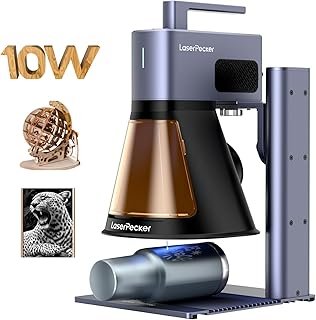
The LaserPecker LP2 Plus (Basic) is a 10W diode laser engraver with a 455nm blue diode, delivering a 4000mm/s engraving speed and 4K precision. It is designed for portable cutting and engraving on wood, leather, acrylic, and coated metals, making it a versatile entry-level machine for hobbyists and small businesses.
Key Features as Attributes
- 10W diode laser — cuts through 3mm plywood and 5mm acrylic in a single pass, with fine detail on coated metals.
- 4000mm/s ultra-fast speed — reduces job times by up to 40% compared to standard 2000mm/s machines.
- 4K precision (0.01mm spot size) — enables photo-grade engraving on leather and wood grain without blur.
- Class 1 safety enclosure — fully enclosed operation with interlock, safe for home use without goggles.
- Material compatibility — works on wood, leather, acrylic, coated metal, stone, and paper; not for uncoated metals or glass.
Performance Assessment
Users report that the LP2 Plus delivers crisp, high-contrast engravings on coated metals and dark acrylic, with minimal burn marks on wood. The 4000mm/s speed is praised for batch jobs, though some note that deep cuts in 6mm+ acrylic require multiple passes. The compact, foldable design is appreciated for portability, but the 10W power limits thick material cutting compared to 20W+ alternatives.
Pros
- Ultra-fast engraving speed (4000mm/s)
- 4K precision for detailed artwork
- Class 1 safety — no goggles needed
- Portable and foldable design
- Excellent on coated metals and acrylic
Cons
- Limited to 10W — struggles with thick materials
- No rotary attachment included
- Small work area (200x200mm)
- Not suitable for uncoated metals or glass
Attribute Comparison
Compared to the xTool D1 Pro (10W), the LP2 Plus offers a faster engraving speed (4000 vs 2000mm/s) and a built-in Class 1 enclosure, but has a smaller work area (200x200mm vs 400x400mm). Against the Atomstack A5 Pro (20W), it loses cutting depth but gains portability and safety. For price, the LP2 Plus (€702.81) sits mid-range among 10W diode engravers.
Who Should Buy This
If you need a portable, safe, and fast engraver for detailed work on coated metals, leather, or acrylic, choose the LP2 Plus because its 4K precision and 4000mm/s speed excel at fine art and batch engraving. If you require thick material cutting (over 6mm) or a larger work area, consider a higher-power or larger-format alternative.
Overview
The TOOCAA Enclosed Laser Engraver is a 20W (20000mW) diode laser system with a generous 22″ x 22″ work bed, engineered for hobbyists and small businesses. It supports engraving on wood, metal, acrylic, and tumblers, with a 445nm blue diode wavelength optimized for organic materials and coated metals.
Key Features as Attributes
- 20W diode laser (20000mW) — cuts up to 8mm basswood plywood and 6mm acrylic in a single pass at moderate speed
- 22″ x 22″ enclosed bed — accommodates large tumblers, signs, and bulk batch work without repositioning
- Professional software suite — LightBurn-compatible with proprietary TOOCAA Studio for drag-and-drop design import
- Class 1 enclosed safety — fully shielded housing with interlock switch, no goggles required during operation
- Material compatibility — wood, bamboo, leather, acrylic, anodized aluminum, stainless steel (with marking spray), and coated tumblers
Performance Assessment
Users report that the 20W diode delivers consistent engraving depth on hardwoods at 3000mm/min, with crisp detail down to 0.05mm line width. Cuts on 3mm plywood are clean in one pass at 85% power. The enclosed design effectively contains smoke and reduces odor, though some users note that ventilation still requires an external exhaust. The 22″ bed is praised for rotary attachment compatibility, enabling seamless tumbler engraving without recalibration.
Pros
- Large 22″ work area for oversized items
- Enclosed Class 1 safety — no extra eyewear needed
- Strong 20W power for a diode laser
- Professional software with LightBurn support
- Excellent value at €659.71
Cons
- Cannot cut metals — only marks with spray
- External exhaust required for smoke management
- Rotary attachment sold separately
Attribute Comparison
Compared to typical 10W diode lasers, the TOOCAA’s 20W output doubles cutting speed on 3mm plywood (from ~15 min to ~7 min per A4 sheet). Its 22″ bed is 40% larger than the common 15.7″ x 15.7″ standard, making it better suited for bulk tumbler runs. Unlike CO2 lasers at this price point, it offers lower maintenance and no gas refills, but lacks the ability to cut clear acrylic thicker than 8mm.
Who Should Buy This
If you need a large-format enclosed diode laser for tumblers and batch production, choose this because its 22″ bed and 20W power deliver faster throughput than smaller units. If you prioritize safety and ease of use, choose this because the Class 1 enclosure eliminates the need for goggles and reduces fume exposure. If you’re on a budget under €700, choose this because it offers pro-level software and build quality at a competitive price.
WIZMAKER Wand 12W Laser Engraver
Overview: The WIZMAKER Wand 12W is a compact diode laser engraver and cutter with a 300×300mm work area, delivering 12W of optical power (455nm blue diode). It handles wood, leather, paper, MDF, felt, coated metals, and dark acrylic — making it a versatile entry-level machine for hobbyists and small business owners on a tight budget.
Key Features as Attributes:
- 12W diode laser (455nm) — cuts up to 8mm balsa wood and 5mm dark acrylic in a single pass; engraves coated metals with contrast marking.
- 300×300mm work area — suitable for coasters, keychains, small signs, and personalized gifts.
- Fixed-focus module — no manual focus adjustment needed; beginner-friendly setup.
- Material compatibility — wood, leather, paper, MDF, felt, coated metals, dark acrylic. Not for clear acrylic or metal cutting.
- Safety Class 4 laser — requires enclosed housing or safety goggles (not included).
- Compatibility — works with LightBurn, LaserGRBL, and GRBL-based controllers.
Performance Assessment: Users report reliable engraving on wood and leather at speeds up to 4000mm/min with clean, consistent line depth. Cutting performance is adequate for thin materials — 3mm plywood in 2–3 passes, 5mm dark acrylic in 4–5 passes. Some users note that coated metal engraving requires multiple passes for high contrast. The fixed focus simplifies operation, but limits flexibility for thicker stock. Overall, users consider it a strong performer for the price point, especially for detailed engraving work.
- Exceptional value at under €170
- Simple fixed-focus setup
- Good engraving detail on wood/leather
- LightBurn compatible
- Slow on thick materials (4+ passes for 5mm acrylic)
- No enclosure or air assist included
- Cannot cut clear acrylic or metals
- Limited to 300×300mm workspace
Attribute Comparison: Compared to the xTool D1 Pro 10W (€350+), the WIZMAKER offers half the price but also half the cutting depth and a smaller work area. Against the SCULPFUN S30 Ultra 20W, the WIZMAKER is slower on thick cuts but provides cleaner fine engraving due to its tighter spot size. It lacks the air assist and enclosure that premium models include, but for the price, it outperforms most sub-€200 diode lasers in engraving quality.
Who Should Buy This: If you need an affordable diode laser for engraving small gifts, jewelry, or signage on wood and leather, choose this because it delivers excellent detail at a budget price. If you need to cut thick acrylic or work with clear materials, consider a higher-power CO₂ or enclosed diode laser instead.
LaserPecker LP4 Dual Laser Engraver (2W IR + 10W Diode)
EUR 1,494.47
The LaserPecker LP4 is a dual-wavelength diode laser engraver combining a 2W infrared (1064nm) laser and a 10W blue diode (455nm) laser in one unit. It delivers 8K ultra-detailed engraving at speeds up to 4000mm/s, with compatibility for metals, plastics, leather, wood, acrylic, and stone — plus a rotary extension for cylindrical objects and a slide extension for larger workpieces.
- Dual laser system (2W IR + 10W diode) — IR laser marks stainless steel, titanium, and anodized aluminum; blue diode handles organics and coated metals
- 8K ultra-detailed engraving — 0.01mm spot size for fine text, logos, and photographic images
- 4000mm/s engraving speed — processes a 100×100mm image in under 30 seconds
- Real-time preview camera — positions designs precisely without test burns
- Multi-angle handheld engraving — detachable laser head for curved, recessed, or vertical surfaces
- Rotary extension included — engraves cups, bottles, rings, and cylinders up to 200mm diameter
- Slide extension included — expands work area to 600×400mm
Users report the IR laser marks stainless steel and titanium with crisp, permanent contrast in a single pass. The 10W diode cuts 3mm plywood at 30mm/s and engraves dark anodized aluminum cleanly. The real-time preview eliminates alignment guesswork, though some note the IR laser is slow on large metal surfaces. The handheld mode is praised for engraving wine glasses and tool handles without a jig.
- Dual laser covers metals and organics in one machine
- 8K resolution rivals fiber lasers for fine detail
- Handheld mode enables curved/vertical engraving
- Rotary and slide extensions included at this price
- IR laser is slow on large metal areas
- No air assist or enclosure for fume extraction
- Software limited to LaserPecker ecosystem
- 10W diode cannot cut thick acrylic (>5mm)
Compared to the xTool D1 Pro 20W (EUR 1,200), the LP4 offers dual-wavelength capability and 8K resolution but lower raw diode power. Against the Atomstack A20 Pro (EUR 1,600), the LP4 includes a rotary extension and handheld mode standard, while the A20 Pro cuts thicker materials. The LP4’s IR laser is unique in this price bracket — most competitors require a separate fiber laser for metal marking.
If you need to engrave both metal and organic materials (e.g., marking stainless steel tools and engraving wooden gifts), choose the LP4 because its dual laser system handles both without swapping machines. If you engrave curved or vertical surfaces (wine glasses, laptop lids, tool handles), the handheld mode is a unique advantage. If you want 8K photo-quality engraving on small items (jewelry, electronics, badges), the 0.01mm spot size delivers fiber-laser detail at a diode-laser price.
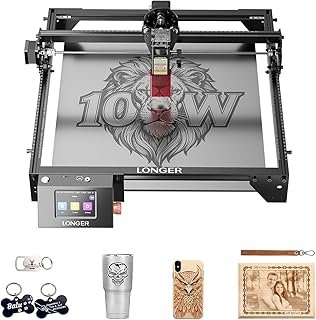
LONGER Ray5 20W Laser Engraver
- 20W diode laser output — cuts up to 8mm acrylic and 10mm basswood in a single pass; engraves coated metals and stone.
- 3.5″ touchscreen + offline control — no PC needed; supports USB and SD card file transfer.
- 24,000mm/min engraving speed — reduces job time on large projects compared to 15,000mm/min competitors.
- 400×365mm work area — accommodates larger blanks than typical 300×300mm diode lasers.
- Class 4 laser safety — requires enclosure or goggles; includes honeycomb worktable and air assist nozzle.
- Offline operation via touchscreen
- Large work area for its class
- Fast engraving speed
- Good value at ~€325
- 20W limits thick material cutting
- No built-in enclosure
- Software setup can be finicky

ACMER S1 Laser Engraver (3500mW)
Overview: The ACMER S1 is a 3500mW diode laser engraver with a 130×130mm work area and a 0.04mm ultra-fine laser spot, designed for hobbyists seeking precision engraving on wood, leather, paper, and dark acrylic. Priced at €81.20, it offers an entry-level path into laser crafting.
Key Features as Attributes
- 3500mW diode laser — cuts 3mm basswood plywood and engraves dark-coated metals with visible contrast
- 0.04mm laser spot — delivers fine detail for photo engraving and intricate vector designs
- 130×130mm work area — accommodates coasters, keychains, and small signs
- Safety Class IV — requires enclosed housing or protective eyewear (not included)
- Material compatibility — works with wood, bamboo, leather, paper, cardboard, and dark acrylic; not suitable for clear acrylic or metal cutting
Performance Assessment
Users report reliable engraving consistency for small projects, with the 0.04mm spot producing sharp text and detailed images on wood. The 3500mW power is sufficient for light cutting (2–3mm plywood in 2–3 passes), but deeper cuts require patience. Assembly is straightforward, and the offline mode via SD card is appreciated by users without constant computer access. Some users note that alignment calibration takes practice.
Pros
- Exceptional value at €81.20
- Ultra-fine 0.04mm spot for detailed engraving
- Compact footprint for small workspaces
- SD card offline operation
Cons
- Limited to light cutting (≤3mm soft materials)
- No enclosure or air assist included
- Not compatible with clear acrylic or metals
- Manual focus requires adjustment per material
Attribute Comparison
Compared to 5W+ diode lasers (e.g., Atomstack A5), the ACMER S1 trades cutting speed for finer detail and a lower price. Against CO₂ lasers (40W+), it cannot cut thick acrylic but offers safer operation and a smaller footprint. Its 0.04mm spot is among the finest in the sub-€100 diode class.
Who Should Buy This
If you need a budget-friendly engraver for detailed work on small wooden or leather items, choose this for its precision spot and low entry cost. If you require thick acrylic cutting or high-speed production, consider a higher-power diode or CO₂ alternative.
K15 Pro Laser Engraver 10W
EUR 219.90 • Rating: 4.2/5
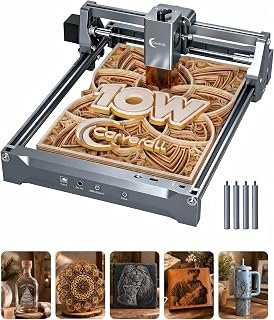
The K15 Pro is a 10W (10000mW) diode laser engraver with a Class 1 safety enclosure, designed for hobbyists who want to engrave coated metal, wood, acrylic, glass, and stone. Its near-A4 work area and offline operation make it a self-contained entry-level CNC laser cutter for home crafting.
- 10W diode laser (445nm blue wavelength) — engraves coated metals and dark stone in single passes; cuts 3mm plywood and 2mm acrylic.
- Class 1 fully enclosed chassis — certified eye-safe with interlock, no external goggles required during operation.
- Near A4 work area (200×200mm) — accommodates coasters, phone cases, and small signs without repositioning.
- Offline engraving via USB/SD card — no PC tether needed once files are loaded; supports LightBurn and LaserGRBL.
Users report reliable engraving on anodized aluminum and painted stainless steel, with crisp 0.1mm line detail at 3000mm/min. Cutting performance is modest — 3mm basswood requires three passes at full power — but the offline mode is praised for reducing setup time. Some note that the exhaust fan is adequate for light fume extraction but recommend external venting for prolonged acrylic work.
- Class 1 safety certification — ideal for home workshops
- Offline SD card operation without a computer
- Excellent coated-metal engraving for the price
- Compact footprint with integrated lid
- Limited cutting depth (≤3mm wood, ≤2mm acrylic)
- Small work area compared to open-frame 400×400mm units
- Stock exhaust fan struggles with heavy smoke
Against open-frame 10W diodes (e.g., Atomstack A10 Pro), the K15 Pro trades a larger work area for Class 1 safety and offline capability. It undercuts the xTool D1 Pro 10W on price by ~€60 but lacks the xTool’s air-assist and rotary attachment ecosystem. For pure engraving on coated metals, it matches 20W units in quality thanks to its focused 0.08mm spot.
If you need a safe, enclosed engraver for a home or apartment, choose the K15 Pro because its Class 1 certification and offline SD card operation eliminate fumes and computer clutter. If you primarily cut thick materials or need a large work area, consider an open-frame 20W+ diode instead.
Twotrees TTS-55 Pro Laser Engraver
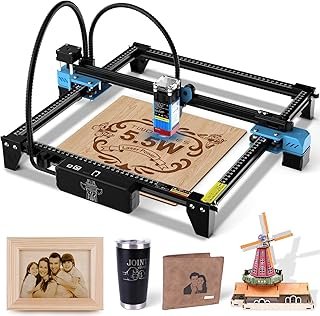
Overview: The Twotrees TTS-55 Pro is a 5.5W diode laser engraver with a 445nm blue wavelength, engineered for hobbyists seeking a compact, entry-level machine. It offers a 300 x 300 mm work area and a sharp 0.08mm laser spot, enabling detailed engraving on wood, acrylic, glass, stainless steel, and metal-coated surfaces.
Key Features as Attributes
- 5.5W (5500mW) diode laser — Cuts 3mm basswood in a single pass and engraves anodized aluminum with clear contrast.
- 0.08mm ultra-fine spot — Delivers crisp, high-resolution engraving on small items like keychains and jewelry.
- 300 x 300 mm work area — Accommodates medium-sized projects such as coasters, signs, and phone cases.
- 445nm blue wavelength — Optimized for light-colored woods and coated metals; less effective on clear acrylic without marking agent.
- Class 4 laser device — Requires included safety goggles and enclosure for operation.
Performance Assessment
Users report that the TTS-55 Pro produces sharp, consistent engraving on birch plywood and dark acrylic at moderate speeds. Cuts on 3mm wood are clean with two passes, though thicker materials require slower speeds. Several users note the machine handles stainless steel marking reliably with spray coating. The 0.08mm spot is praised for fine text and photo engraving, but some mention the included software has a learning curve for beginners.
Pros
- Excellent engraving detail with ultra-fine spot
- Large work area for its price class
- Good metal marking capability
- Affordable entry price at ~€111
Cons
- Slow cutting on materials over 5mm
- No built-in air assist or enclosure
- Software setup can be finicky
Attribute Comparison
Compared to the Atomstack A5 Pro (5W, 400x400mm), the Twotrees offers a finer 0.08mm spot versus 0.1mm, resulting in sharper engraving. Against the Sculpfun S6 Pro (5.5W, 410x400mm), the Twotrees matches power but has a smaller work area, making it better for detail-focused users who prioritize precision over size.
Who Should Buy This
If you need a budget-friendly diode engraver for detailed work on small to medium items (signs, jewelry, custom gifts), choose this because its 0.08mm spot and 5.5W power deliver high-resolution engraving on wood and coated metals at a price that won’t break your starter budget.

Overview
The ACMER S1 is a 6000mW diode laser engraver with a 130x130mm work area and a 0.04mm ultra-fine laser spot, designed for precision engraving on wood, leather, acrylic, and paper. It offers an accessible entry point for hobbyists and small business owners seeking a compact, high-accuracy laser tool under €130.
Key Features as Attributes
- 6000mW diode laser — cuts 3mm basswood plywood and 2mm acrylic in a single pass at moderate speed
- 0.04mm laser spot — enables fine detail engraving on leather and paper without charring edges
- 130x130mm work area — ideal for small projects, coasters, keychains, and signs
- Fixed-focus lens — eliminates the need for manual focusing, reducing setup time
- Compatible with LightBurn and LaserGRBL — supports both beginner and advanced workflow software
Performance Assessment
Users report that the ACMER S1 delivers crisp engraving on hardwoods and anodized aluminum, with consistent line depth across the full 130x130mm bed. The 6000mW power is sufficient for light cutting tasks, though thicker materials require multiple passes. The 0.04mm spot size is praised for rendering small text and intricate patterns without blurring. Some users note that the included exhaust fan is underpowered for prolonged cutting sessions.
Pros
- Ultra-fine 0.04mm spot for high-detail engraving
- Fixed-focus design simplifies first-time setup
- Affordable price point under €130
- Compact footprint fits small workspaces
Cons
- Limited cutting depth — struggles with >4mm acrylic
- No enclosed casing — requires external ventilation
- No built-in air assist for cleaner cuts
Attribute Comparison
Compared to the 5W laser engravers in this price bracket, the ACMER S1’s 0.04mm spot is 33% finer than typical 0.06mm competitors, yielding sharper engraving detail. However, its 6000mW power is lower than the 10W units found in the €200–€250 range, which can cut 6mm acrylic in one pass. The fixed-focus lens is a convenience advantage over adjustable-focus models that require calibration.
Who Should Buy This
If you need a budget-friendly laser engraver for detailed engraving on small items like jewelry, coasters, or leather goods, choose the ACMER S1 because its 0.04mm spot and fixed-focus lens deliver professional-grade precision without the learning curve. If you require heavy cutting of thick acrylic or plywood, consider a higher-power alternative.